
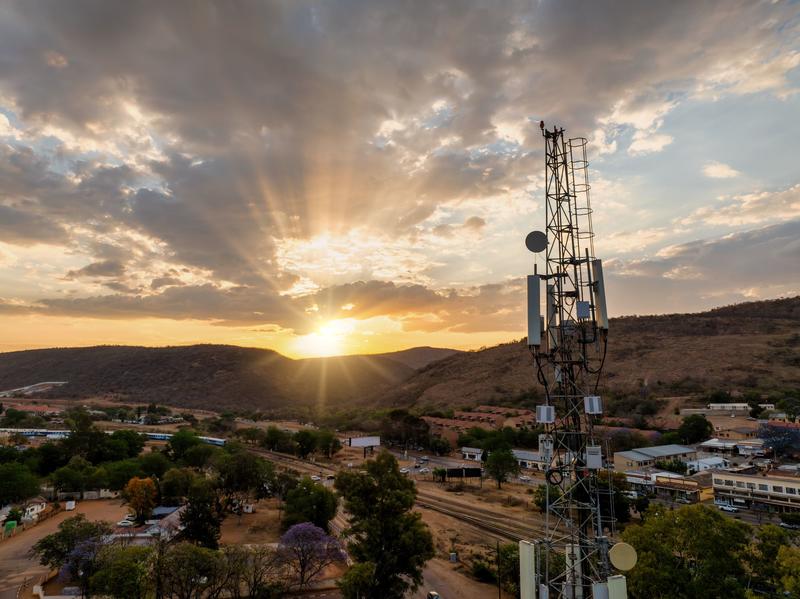
A telecom financing deal can look like just another corporate funding announcement.
But when the United States commits nearly $100 million to an African telecom operator, the story becomes much bigger than one company.
It becomes a story about connectivity, technology infrastructure, digital sovereignty, international investment, vendor competition and the future of Africa’s digital economy.
On September 11, 2026, Reuters reported that the U.S. administration had approved a nearly $100 million loan to Africell, Africa’s only American-owned telecommunications company, through the Export-Import Bank. The financing is intended to support Africell’s investment in mobile-network technology from American and allied suppliers.
Africell says it operates across Angola, the Democratic Republic of Congo, Sierra Leone and The Gambia. Its investor materials currently list more than 15 million subscribers and more than 2,600 towers.
And that is where businesses, investors and technology companies should start paying attention.
This is not just about telecoms
When people hear “telecom infrastructure,” they often think about mobile phone towers, SIM cards and internet connectivity.
But modern telecommunications infrastructure sits underneath almost every major part of the digital economy.
- Cloud services need connectivity.
- Fintech platforms need reliable networks.
- Digital banking needs infrastructure.
- AI applications need data transmission and computing infrastructure.
- E-commerce needs reliable connectivity.
- Businesses using CRM platforms, cloud software and remote collaboration tools depend on networks.
- Governments building digital public services depend on networks.
- Remote work depends on the availability, affordability and reliability of digital infrastructure.
So when a major telecom operator receives financing to upgrade its network, the potential economic impact extends beyond the operator itself.
It creates demand throughout an ecosystem.
And that ecosystem is where many businesses may find opportunities.
Why the Africell deal matters
The immediate focus is network technology. According to Reuters, the loan will enable Africell to invest in the latest mobile-network technology from American and allied suppliers. Reuters also reported that the move forms part of Washington’s broader effort to increase the use of non-Huawei telecommunications equipment internationally.
That makes this more than a financing transaction.
It is also part of a larger competition over who supplies the infrastructure powering Africa’s digital future.
For African markets, that competition can create both opportunities and challenges.
For technology companies, it can create new markets. For investors, it can create new infrastructure opportunities. For local businesses, it can create opportunities to become implementation, distribution, consulting, maintenance, training and partnership partners.
And for governments, it raises an increasingly important question:
Who owns, supplies, operates and secures the infrastructure on which the digital economy depends?
Africa’s digital infrastructure opportunity is much bigger than 5G
One mistake businesses can make is looking at this development only through the lens of 5G.
The opportunity is much broader.
- Mobile networks
- Fibre-optic infrastructure
- Data centres
- Cloud computing
- Internet exchange points
- Enterprise connectivity
- Cybersecurity
- Network security
- Digital identity infrastructure
- Payment infrastructure
- Cloud-based business applications
- AI infrastructure
- Data storage
- Network monitoring
- Telecom software
- Infrastructure maintenance
- Digital skills and technical training
- Managed IT services
Africell’s own technology overview illustrates this wider ecosystem: its network infrastructure supports mobile money and financial services, digital education, gaming and streaming, coding and app development, mobility services and other digital activities.
The Africell story therefore provides a useful reminder:
The digital economy cannot grow without the physical and technical infrastructure underneath it.
The hidden opportunity: the supplier ecosystem
Whenever a large infrastructure project receives significant financing, the obvious question is:
Who gets the money?
But businesses should also ask:
Who will be needed to execute the project?
A telecom operator upgrading its network may require much more than equipment.
- Local implementation partners
- Technical contractors
- Network engineers
- Project managers
- Procurement specialists
- Compliance advisers
- Cybersecurity providers
- Logistics companies
- Local distributors
- Installation teams
- Training providers
- Business-development partners
- Government-relations advisers
- Market-entry consultants
- Enterprise sales teams
This is where infrastructure financing becomes interesting for SMEs and professional service firms.
A company does not necessarily need to be a Nokia, Dell or Oracle-sized technology company to participate in an infrastructure ecosystem. There are layers of opportunity beneath the headline project.
What African businesses should learn from this
There is a bigger business lesson here.
Capital tends to follow infrastructure priorities.
When governments, development institutions, export-credit agencies and international investors begin directing capital toward a sector, companies operating around that sector should pay attention.
Not because every company will receive funding.
But because large investments create secondary markets.
Imagine a major telecom company expanding into a new market.
- It may need technology.
- Then it needs installation.
- Then maintenance.
- Then security.
- Then customer acquisition.
- Then enterprise sales.
- Then local partnerships.
- Then regulatory support.
- Then workforce development.
- Then ongoing technology upgrades.
One large infrastructure investment can therefore create dozens of commercial opportunities around it.
That is why companies should stop looking at funding announcements only as news.
They should learn to read them as signals of where demand may be heading.
What this means for technology companies
For technology businesses, this is a strong reminder to look beyond selling software directly to consumers.
Enterprise and infrastructure opportunities can be significantly larger.
Cybersecurity
Network expansion creates more endpoints, systems and data that need protection.
Cloud services
Growing digital infrastructure increases demand for scalable computing and storage.
AI solutions
More connected businesses generate more data and more opportunities for automation and intelligence.
Data-centre services
Connectivity growth increases the importance of reliable data storage and processing.
Enterprise software
Telecom operators and infrastructure companies need CRM, ERP, analytics, workflow and customer-service systems.
Digital training
Infrastructure requires people who can operate, maintain, secure and commercialise it.
Procurement and sourcing
Large infrastructure projects require equipment, components and specialised services.
The question is therefore not simply:
“Can we sell our product to a telecom company?”
A better question is:
“Where does our product or capability fit inside the infrastructure value chain?”
That is a much more strategic way to approach the market.
There is also an opportunity for African partnerships
International companies entering African markets often need something they cannot build overnight:
local knowledge.
They need to understand regulations. They need credible local partners. They need market intelligence. They need introductions. They need distribution. They need local implementation capacity. They need business-development support. They need to understand how procurement works.
This creates an opportunity for African companies that can position themselves as market-entry and implementation partners, rather than simply service providers.
That distinction matters.
A company saying, “We provide business-development services,” is competing in a broad market.
A company saying, “We help international technology companies identify qualified African partners, enter selected markets, develop commercial relationships and build local implementation capacity,” is much more strategically positioned.
The Angola connection is particularly interesting
Africell’s current footprint covers Angola, DRC, Sierra Leone and The Gambia. Its investor information currently lists more than 15 million subscribers and more than 2,600 towers.
Angola is particularly relevant to the latest financing. Africell launched commercial services there in April 2022 and has since expanded rapidly. In July 2026, the company announced that Africell Angola had surpassed seven million customers and planned to extend network coverage into seven additional provinces.
That expansion is important because it shows how connectivity investment can create a wider commercial ecosystem. Africell’s Angola operation has also developed enterprise services, including Private APN, VPN, Bulk SMS and machine-to-machine connectivity for businesses.
Its earlier Angola infrastructure programme also involved international technology vendors including Nokia and Oracle and local partners such as Angola Cables and MSTelcom, demonstrating how international technology and local implementation capacity can work together.
Angola is therefore worth watching for businesses looking at infrastructure, energy, logistics, technology and regional investment.
A company that wants to participate in African infrastructure opportunities should not only ask:
“What is happening in Nigeria?”
It should also ask:
“Which African markets are attracting capital, infrastructure and international strategic attention?”
That shift in thinking can uncover opportunities before they become obvious.
What investors should be watching
For investors, the Africell financing provides another useful signal: digital infrastructure is becoming increasingly strategic.
- Connectivity
Companies improving broadband and mobile access remain fundamental to digital growth. - Data infrastructure
Data centres, storage, cloud services and related infrastructure become more important as businesses digitise. - Cybersecurity
As more infrastructure becomes connected, security becomes a commercial necessity rather than an optional service. - Enterprise technology
Large infrastructure networks require systems that help manage customers, operations, finances, sales and data. - Infrastructure services
Installation, maintenance, logistics and technical support can become significant markets around large infrastructure projects. - Digital skills
Infrastructure is only valuable when businesses and people have the skills to use it. - Local technology ecosystems
Companies that help international technology providers localise, implement and scale across African markets could become increasingly valuable.
What SMEs can do now
You do not need a $100 million project to start positioning for this market.
You can start by identifying where your capabilities fit.
- Which infrastructure sectors are growing?
Look beyond telecoms. Track cloud, AI, data centres, cybersecurity, fintech infrastructure, logistics technology and digital public infrastructure. - Which companies are receiving major financing?
A funding announcement can reveal future procurement and partnership demand. - Who are the technology suppliers?
Once you identify the major suppliers, research their African expansion plans. - Who are their local partners?
This can reveal gaps in distribution, implementation and market access. - What capability can your company bring?
Do not approach a major company simply saying you want to partner. Know exactly what problem you can solve.
A better way to think about business development
This is where many African businesses can improve their approach.
Business development should not begin with:
“Who can I sell to?”
It should begin with:
“Where is capital moving, what problem is it funding, and which businesses will be required to execute it?”
That is a completely different approach.
If $100 million is moving into telecom infrastructure, do not stop at Africell.
Map the ecosystem.
- Who supplies the equipment?
- Who installs it?
- Who provides cybersecurity?
- Who manages the data?
- Who provides cloud services?
- Who handles logistics?
- Who trains the workforce?
- Who provides enterprise solutions?
- Who provides local regulatory support?
- Who can facilitate partnerships?
- Who will need financing next?
That is how an individual funding announcement becomes a business-development intelligence exercise.
The BridgePoint Perspective
At BridgePoint Growth & Consulting, we believe businesses should learn to see opportunities beyond the headline.
A major infrastructure investment is rarely just about the company receiving the financing.
It can signal a larger shift in where capital, technology, partnerships and commercial demand are moving.
For African businesses, this means becoming more intentional about market intelligence, strategic partnerships, business development and positioning.
For international companies, it means understanding that entering Africa successfully requires more than bringing a product into the market.
It requires the right local relationships, market strategy, commercial positioning and implementation ecosystem.
This is where strategic business-growth support becomes valuable.
At BridgePoint, we help businesses identify opportunities, build strategic partnerships, strengthen their market positioning and develop pathways for sustainable growth.
The question is not simply whether your business can benefit from Africa’s digital transformation.
Have you positioned your business to participate in it?
Final takeaway
The nearly $100 million Africell financing is significant because it sits at the intersection of capital, technology, connectivity and geopolitics.
But its biggest lesson for African entrepreneurs may be even simpler:
Infrastructure creates ecosystems. And ecosystems create opportunities.
The companies that benefit from Africa’s next wave of digital infrastructure will not only be the companies building towers or supplying network equipment.
They will also include the businesses providing technology, cybersecurity, cloud services, logistics, training, consulting, implementation, procurement, market access and strategic partnerships around those projects.
So do not just watch where the money goes.
Study what the money will create.
That is where the next business opportunity may be.
Sources & further reading
- Reuters — Trump administration to lend $100 million to Africell, countering Huawei in Africa
- Africell — Investors: operating footprint, subscribers and towers
- Africell — Technology and network infrastructure
- Africell — Angola passes seven million customers and announces further expansion
- Africell — High-tech data centre and digital ecosystem in Angola
- Oxford School of Global and Area Studies — Digital sovereignty and Africa’s technology future
Position your business for the opportunities infrastructure creates.
If your company operates in technology, telecoms, digital infrastructure, procurement, consulting, business development, partnerships or market expansion, BridgePoint Growth & Consulting can help you identify strategic opportunities, build the right partnerships and position your business for growth.
Building people. Growing businesses. Creating opportunities.
Book a Strategy Call Explore Our SolutionsJoin The Wealth Movement
For founders, investors, professionals and business leaders who want to stay informed about funding, investment opportunities, partnerships, business opportunities and growth intelligence, join The Wealth Movement, powered by BridgePoint Growth & Consulting, on WhatsApp.
This is not about chasing every opportunity. It is about learning to identify the right opportunities and position for them early.
Discover. Connect. Build. Grow.
Join The Wealth MovementThe information in this article is for general educational and business-information purposes. It is not financial, legal or investment advice. Verify important information and seek qualified professional advice where appropriate.