There was a time when learning a digital skill was enough to make you stand out.
Learn social media management. Learn graphic design. Learn data analysis. Learn digital marketing. Learn how to build websites.
Then put the certificate on your CV and start applying.
That model is changing.
Today, thousands of people can say they know how to use digital tools. Increasingly, employers and clients want to know something else:
What can you actually do with those skills?
That is why an opportunity currently opening through Soronko Academy caught my attention.
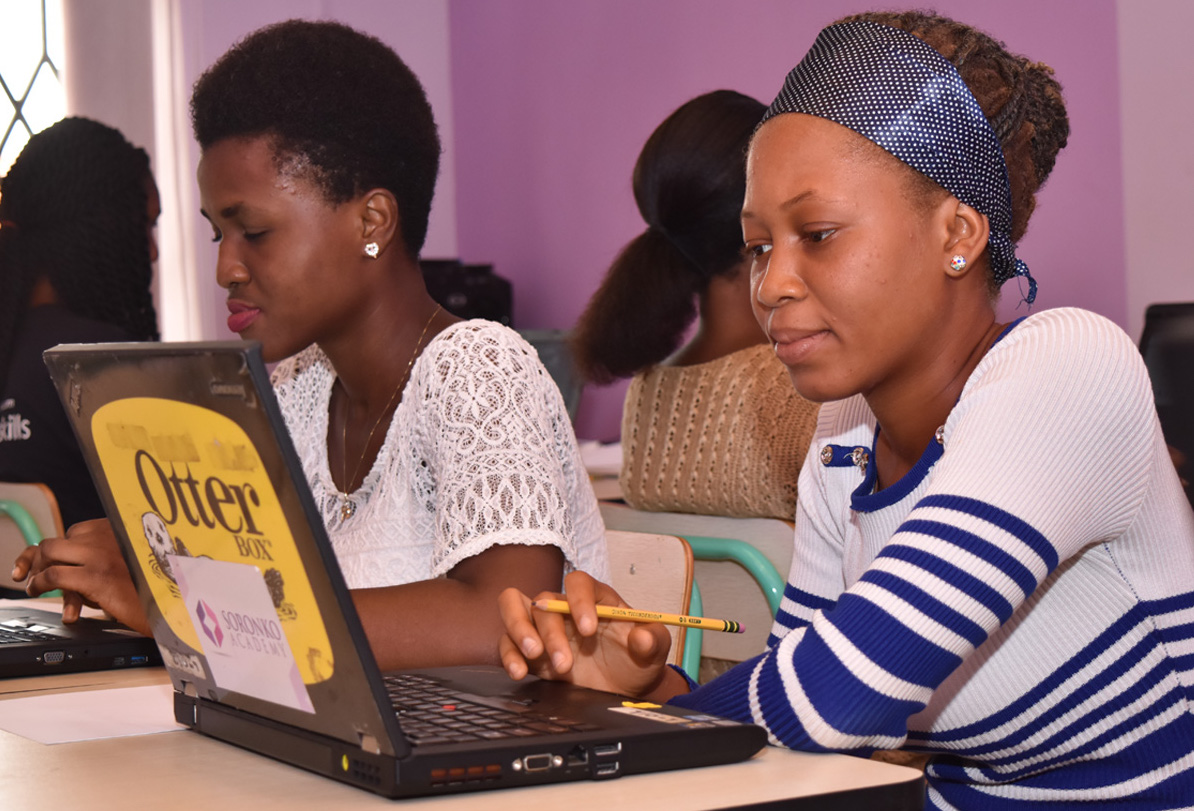
Through its SCILLS Scale Up 1.0 programme, Soronko Academy is offering women in Ghana tuition-free practical training in Social Media, Content & AI Marketing and Data Analytics & AI for Work and Business. The six-week programme is being delivered online as well as through an in-person option, with applications closing 30 September 2026. (LinkedIn)
But the real lesson goes beyond this particular programme.
It is about career leverage.
And career leverage is becoming one of the most important concepts for anyone trying to remain competitive in an AI-driven economy.
The problem isn't that people don't have skills
The problem is that too many people have skills that are difficult to distinguish from everyone else's.
You can have a certificate in digital marketing.
So can 10,000 other people.
You can know how to use Canva.
So can millions of people.
You can write prompts for AI tools.
So can almost anyone who has spent enough time experimenting with them.
You can say you know data analytics.
But can you use data to help a company make a better decision?
You can say you know social media marketing.
But can you turn content into qualified leads?
You can say you know AI.
But can you redesign a business process with it and demonstrate what improved?
That is the difference between having a skill and having leverage.
And the distinction is becoming increasingly important as AI makes many individual tasks easier to perform.
AI is changing the value of skills
Consider what has happened to content creation.
A few years ago, knowing how to write reasonably well gave you a significant advantage.
Today, AI can generate a first draft in seconds.
Graphic design has experienced a similar shift.
AI can now generate images, layouts, presentations and marketing concepts at a speed that would have required considerably more manual work before.
Data analysis is changing too.
AI tools can increasingly help users clean information, identify patterns, generate formulas and explain findings.
This does not mean those professions are disappearing.
It means the baseline is moving upward.
The valuable professional is increasingly the person who can combine technology with judgement.
Someone who understands the business problem.
Someone who knows which tool to use.
Someone who can interpret the result.
Someone who can communicate the insight.
And someone who can take responsibility for what happens next.
That is career leverage.
This is why the Soronko opportunity is interesting
The SCILLS Scale Up 1.0 programme isn't simply teaching people how to use a computer.
Its two tracks are deliberately connected to real economic activity:
Social Media, Content & AI Marketing
and
Data Analytics & AI for Work and Business.
The online programme runs for six weeks, with different schedules beginning in October. Soronko Academy says the programme is designed to build practical skills that participants can use at work, in business, freelancing and entrepreneurship. (LinkedIn)
The programme is being implemented by Soronko Academy in partnership with the Internet Society Foundation as part of the wider SCILLS initiative focused on economic empowerment and pathways into employment, entrepreneurship, remote work and freelancing. (LinkedIn)
That is the part people should pay attention to.
The goal is not simply learning. It is learning that can be converted into economic opportunity.
That is a much better way to think about digital education.
Certificates are not the end product
Imagine two people apply for the same remote marketing position.
Person A says:
“I completed a digital marketing course.”
Person B says:
“I helped a fashion business create a content strategy, used AI to speed up content production, analysed the engagement data and redesigned the campaign based on what customers responded to.”
Both may have taken a course.
But Person B has something more valuable.
Evidence.
The same applies to data.
Instead of saying:
“I know Excel and data analytics.”
Imagine being able to show:
“I analysed six months of sales data, identified the products generating the highest margins, built a dashboard and recommended three changes to the company's sales strategy.”
That is no longer simply a skill.
That is business value.
And business value is what creates leverage.
So what should you do after learning a digital skill?
This is where many people get stuck.
They finish the course and immediately start looking for another course.
Then another certificate.
Then another webinar.
Then another training.
Eventually they have a folder full of certificates but very little evidence of what they can actually deliver.
Instead, after learning something, build something.
If you learn social media marketing, create a campaign.
If you learn data analytics, analyse a dataset.
If you learn AI automation, automate a repetitive workflow.
If you learn customer support, build a customer-service workflow.
If you learn project management, create a project plan and demonstrate how you would manage it.
If you learn sales, build a prospecting system.
If you learn content creation, create a complete campaign rather than ten disconnected posts.
Your portfolio should answer one question:
“If I hire you, what can you do for me?”
AI fluency should sit on top of your existing expertise
There is another mistake people make.
They think they need to abandon what they already know and become “an AI person.”
Not necessarily.
The stronger strategy for many professionals is to combine AI with an existing area of expertise.
A marketer who understands AI becomes an AI-enabled marketer.
A salesperson who understands AI becomes better positioned to use AI for research, prospecting, qualification and follow-up.
A project manager who understands AI can automate reporting, documentation and workflow coordination.
An accountant can use AI to accelerate analysis while maintaining professional judgement.
A teacher can use AI to develop learning materials and personalise educational support.
A customer-support professional can understand conversational AI, knowledge bases and escalation workflows.
A business consultant can use AI to accelerate research, analysis and strategy development.
The advantage is in the combination.
Your existing domain knowledge gives AI context.
AI gives your expertise speed and scale.
Together, they can become much more valuable than either one alone.
And this is where African professionals have a major opportunity
Africa's digital-skills challenge is often discussed as though the solution is simply to train more people.
Training matters.
But training without pathways to economic participation is incomplete.
The African Centre for Social and Population Research makes a similar point: digital skills become economically meaningful when they connect with labour-market opportunities, entrepreneurship, inclusion and investment. (ACSPR)
This is also reflected in the work of Technology for Social Change and Development Initiative, commonly known as Tech4Dev, which focuses on combining digital skills development with pathways to jobs and entrepreneurship across Africa. (Tech4Dev)
The opportunity therefore isn't simply:
“Learn technology.”
It is:
Learn technology → practise it → solve problems → document the results → connect with the market.
That is the bridge between skills and income.
For Nigerians, this is an important lesson too
You don't need to wait for a programme specifically designed for Nigeria before you start building this kind of leverage.
You can begin with the work already around you.
Take a small business.
Find a problem.
Solve it.
Maybe their social media content is inconsistent.
Maybe their customer enquiries are scattered across WhatsApp.
Maybe their sales records are sitting in notebooks.
Maybe they have no CRM.
Maybe they spend hours preparing weekly reports.
Maybe they don't know which products actually generate the most revenue.
Maybe they are collecting customer information but doing nothing with it.
Those are opportunities to practise.
And if you solve the problem well, you have something more powerful than a certificate.
You have a case study.
Your portfolio should start telling stories
Don't build a portfolio that simply says:
“Skills: Canva, Excel, ChatGPT, Social Media, Google Workspace.”
That is a list.
Instead, show:
The problem.
What was wrong?
The approach.
What did you do?
The tools.
What technology did you use?
The result.
What changed?
Even when you are working on personal projects, you can structure them this way.
That makes your portfolio much easier for a potential employer or client to understand.
It turns your skills into evidence.
Networking becomes even more important in an AI economy
Technology may make work faster, but relationships still create opportunities.
And this is especially important for people building careers remotely.
You can have an excellent skill and still struggle if nobody knows what you do.
That is why career leverage isn't only about technical capability.
It is also about visibility, credibility and relationships.
Share what you are learning.
Show your projects.
Talk about problems you have solved.
Connect with people in your industry.
Participate in communities.
Ask intelligent questions.
Collaborate.
Help someone before you need something from them.
Your network should not only know your name.
It should know what you are good at.
This is also why opportunities like SCILLS matter
The programme is not only about acquiring technical knowledge.
It creates a structured environment where participants can learn alongside others and potentially build connections around technology, work and entrepreneurship.
Soronko Academy has been operating in Ghana's technology and digital-skills ecosystem for years and says it has trained more than 20,000 women and girls across 13 regions in Ghana, with programmes spanning technical skills, entrepreneurship and soft skills. (LinkedIn)
The current SCILLS programme is specifically designed around economic empowerment, with Soronko stating that the wider programme aims to reach 5,000 participants and create pathways to economic opportunities for thousands of them. (LinkedIn)
That model is worth studying.
Because Africa doesn't only need more people who know how to use technology.
Africa needs more people who can turn technology into economic value.
If you're applying, choose the track strategically
Don't simply choose a course because “AI” is in the title.
Ask yourself where you want the skill to take you.
If you are interested in content, social media, digital marketing, branding or client acquisition, Social Media, Content & AI Marketing may be the more natural fit.
If you enjoy numbers, reporting, business intelligence, decision-making or operational analysis, Data Analytics & AI for Work and Business may provide a stronger foundation.
And if you already have experience in either area, don't start from zero mentally.
Think:
How can this training multiply what I already know?
That is a much more powerful question.
Opportunity details
Programme: Soronko SCILLS Scale Up 1.0 Provider: Soronko Academy Partner: Internet Society Foundation Target: Women in Ghana Format: Online and in-person options Duration: Six weeks Cost: Tuition-free Tracks: Social Media, Content & AI Marketing; Data Analytics & AI for Work and Business Online start dates: 5 and 6 October 2026, depending on schedule Application deadline: 30 September 2026 (LinkedIn)
The online application is currently being promoted by Soronko Academy through its official channels. (LinkedIn)
Important: This specific programme is for women in Ghana, so Nigerian applicants should not assume they are eligible simply because the training is online.
That distinction matters.
Not every opportunity is meant for everyone.
Good opportunity research is not about forwarding everything you see.
It is about knowing what fits you.
The bigger lesson
The AI economy is not going to reward everyone who takes an AI course.
It will reward people who know how to apply AI to something that matters.
That could be a business problem.
A customer problem.
A data problem.
A marketing problem.
An operational problem.
A research problem.
A productivity problem.
Or a completely new problem that hasn't existed before.
So if you're currently learning a digital skill, don't stop at the certificate.
Build something.
Solve something.
Document something.
Share something.
Connect with people.
Look for opportunities where your new capability can create measurable value.
Because the strongest career position in the AI economy won't necessarily belong to the person who knows the most tools.
It will belong to the person who can say:
“Here is the problem. Here is what I built. Here is how I used technology. And here is what changed because of it.”
That is career leverage.
And that is the shift from digital skills to real opportunities.
---
The BridgePoint Perspective
At BridgePoint Growth & Consulting, we believe skills should connect to outcomes.
Whether it is digital transformation, business growth, talent development, partnerships or technology adoption, the real question is never simply, *“What can you learn?”*
It is:
“What can this capability help you build, improve or unlock?”
For professionals, that may mean becoming more competitive in the job market.
For entrepreneurs, it may mean using technology to reduce costs or reach more customers.
For businesses, it may mean redesigning processes and preparing teams for an AI-enabled economy.
And for organisations developing talent, it means creating training that doesn't end when participants receive certificates.
It ends when they can create value.
If your organisation is looking to build digital capability, strengthen its workforce, improve business processes or identify practical growth opportunities in the AI economy, BridgePoint Growth & Consulting can help you move from ideas to execution.
---
Stay connected to opportunities
Opportunities are appearing across jobs, training, funding, entrepreneurship, partnerships and technology.
The challenge is knowing which ones are legitimate, relevant and worth your attention.
That is why BridgePoint created The Wealth Movement — a WhatsApp community for founders, entrepreneurs, professionals, investors and opportunity-seekers who want access to useful opportunities and practical business intelligence.
If you want to stay closer to opportunities that can help you build skills, grow businesses, access capital and create wealth, join The Wealth Movement on WhatsApp.
---
Sources
- (LinkedIn) — Soronko Academy's current programme announcements and application deadline.
- (LinkedIn) — Soronko Academy/Regina Honu's programme details, objectives and eligibility.
- (LinkedIn) — Soronko Academy background and history.
- (Tech4Dev) — Tech4Dev's digital-skills and economic-opportunity model.
- (ACSPR) — African Centre for Social and Population Research on digital skills and economic opportunity.
Work With BridgePoint
If your organisation is looking to build digital capability, strengthen its workforce, improve business processes or identify practical growth opportunities in the AI economy, BridgePoint Growth & Consulting can help you move from ideas to execution.
Driving Growth. Building Futures.
Book a Strategy CallSources
Soronko Academy — programme information and current digital-skills initiatives.
Soronko Academy on LinkedIn — current SCILLS Scale Up 1.0 announcement, tracks, dates and deadline.
Soronko SCILLS — programme background and digital-inclusion information.
Tech4Dev — digital-skills and economic-opportunity context.
African Centre for Social and Population Research — digital skills and economic opportunity.